← All guides · ⬇ Printable 2-PDF Master Bundle ($19)
Wooden Play Kitchens & Pretend Play Food
A play kitchen is one of the few toys kids use from age 18 months to 6 years. These wooden kitchens, play food, cookware, and shop sets support language, counting, and independent play for hours, with no screens or batteries.
1–2 yrs2–3 yrs3–4 yrs4–6 yrs
What to Avoid
- Soft PVC play food that can contain phthalate plasticizers
- Plastic kitchens with lots of electronic sound effects that limit imaginative play
- Tiny play-food pieces for under-3s (check the age label for small-parts warnings)
- Particleboard kitchens with no published finish or emissions info
Testing & Certifications to Look For
ASTM F963 / CPSIA tested (US toy safety)EN 71 (European toy safety standard)FSC-certified or sustainably sourced woodWater-based paints and finishes
Our Picks
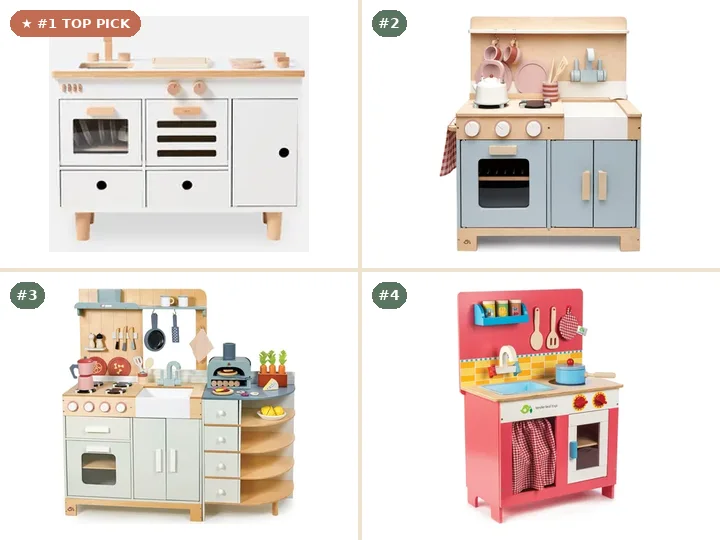
Wooden Play Kitchen
Plastic electronic play kitchens · $140–$500
A sturdy wooden kitchen at toddler height with a sink, stove, and storage invites hours of cooking, washing, and serving pretend meals.
Wooden construction, child-height counters, storage cabinets
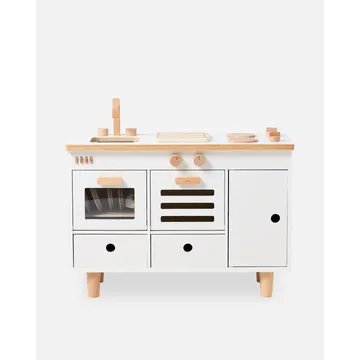
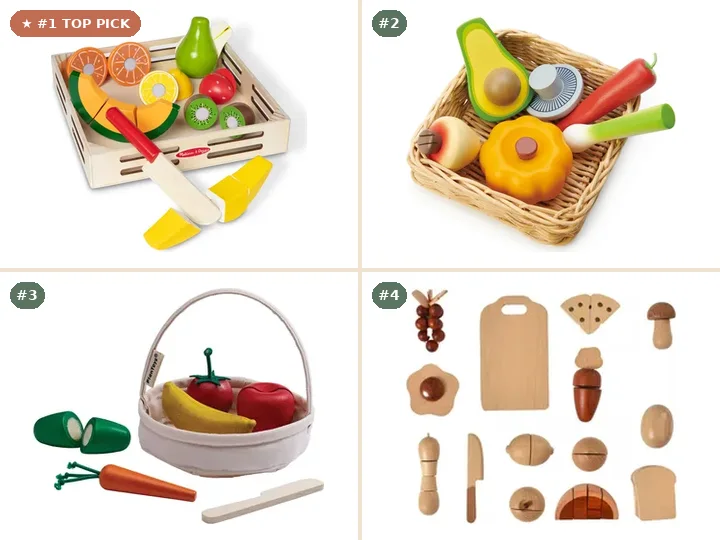
Wooden Play Food Sets
Squishy PVC play food · $25–$49
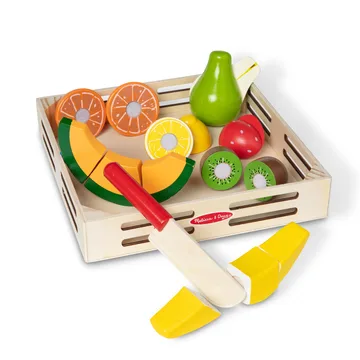
Sliceable fruit, veggie baskets, and market sets build vocabulary, color recognition, and early fine motor skills as kids 'cut' and sort food.
Wood pieces, some with velcro 'slice' joins
Wooden Pots, Pans & Tea Sets
Thin plastic cookware sets · $37–$48
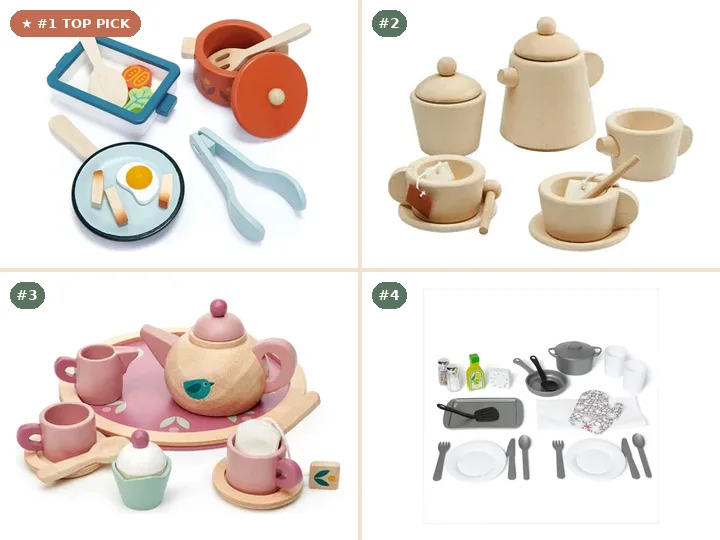
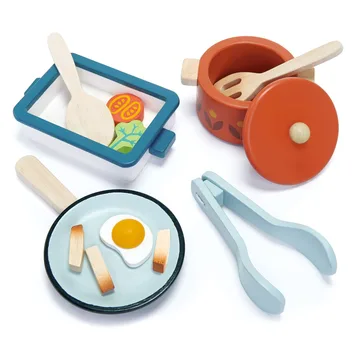
Pots, pans, and tea sets round out the kitchen and make for screen-free tea parties with siblings, stuffed animals, and grandparents.
Wooden or durable play cookware, multi-piece sets
Pretend Play Grocery Store & Cafe
App-based shopping games · $33–$139
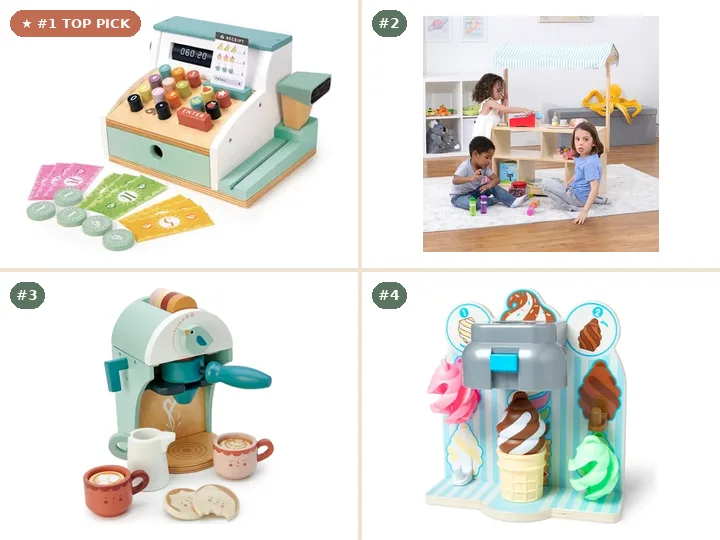
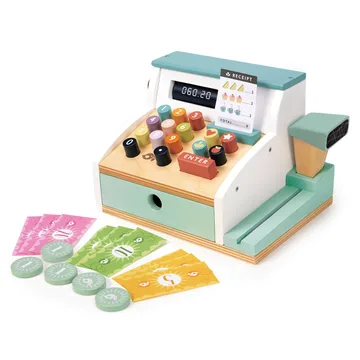
Cash registers, market stands, and cafe machines turn the kitchen corner into a store or coffee shop. Kids practice taking turns, early math, and social skills.
Wooden till/market/cafe sets with play accessories
FAQs
What age is best for a play kitchen?
Most kids start playing with a kitchen around 18 months to 2 years, and many keep using it until 6 or 7. Choose a counter height that fits your child now. Some kitchens have adjustable legs.
Is wooden play food better than plastic?
Wooden play food lasts for years, skips the soft-plastic question entirely, and often comes in sliceable sets that build fine motor skills. If you buy plastic, look for brands that state their products are phthalate-free and BPA-free.
How do I keep a play kitchen from becoming clutter?
Keep a small, rotating set out: one pot, a few foods, and a couple of utensils. Store the rest in a basket. Fewer pieces means more focused play and an easier tidy-up for little hands.
Get the Non-Toxic Nursery & Playroom Checklist (Free Printable)
A room-by-room checklist for the crib, nursery, playroom, feeding and bath, plus a label decoder for the certifications worth looking for. Enter your email and the download link appears instantly.