
← All guides · ⬇ Printable 2-PDF Master Bundle ($19)
Non-Toxic Changing Pads & Organic Covers
Your baby lies on the changing pad several times a day, cheek against the cover. These picks swap vinyl covers and polyurethane foam for organic cotton and PVC-free materials, with brand-stated certifications you can check.
0–12m1–2 yrs
What to Avoid
- Vinyl (PVC) changing pad covers. Naturepedic and Babyletto both advertise PVC-free waterproofing instead
- Polyurethane foam pads treated with chemical flame retardants. Babyletto says its Pure pad's polyester fill is free of both
- Changing pads not secured to the dresser top. Use the pad's safety strap and screws or grips, and keep one hand on your baby
- Leaving a baby alone on any raised changing surface, even for a second
- Heavily scented pad liners and wipes
Testing & Certifications to Look For
GREENGUARD Gold (Naturepedic and Babyletto list it for their pads)GOTS organic cotton (Naturepedic pad; Babyletto and Little Unicorn covers, per the brands)MADE SAFE (Naturepedic, per the brand)OEKO-TEX Standard 100 (Little Unicorn organic covers, per the brand)CA TB117-2013 compliance without added flame-retardant chemicals (Babyletto Pure, per the brand)
Our Picks
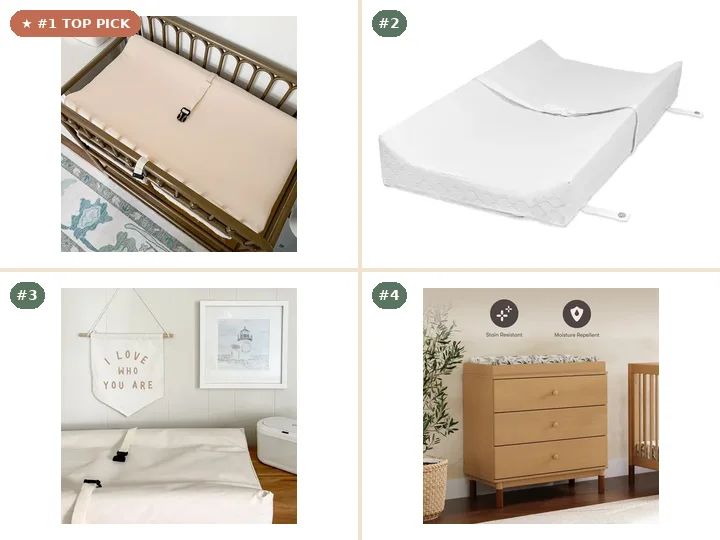
Organic and PVC-Free Contoured Changing Pads
Vinyl-covered polyurethane foam changing pads
Naturepedic's pad pairs GOTS organic cotton with plant-based PE waterproofing (from non-GMO sugarcane) and lists GREENGUARD Gold and MADE SAFE. Babyletto's Pure 31" pad is GREENGUARD Gold certified, with a PVC-free waterproof cover and polyester fill free of chemical flame retardants, polyurethane foam and vinyl, per the brand.
Naturepedic: 16.5 x 31.5 x 4 in, two- or four-sided, safety buckle and snap screws, made in the USA; Babyletto Pure: 31 x 16 x 4 in, contoured walls, safety strap, fits Babyletto changer trays
Why we picked it: GREENGUARD Gold means strict limits on chemical emissions (VOCs), and food-grade PE waterproofing replaces vinyl, so the surface wipes clean without PVC.
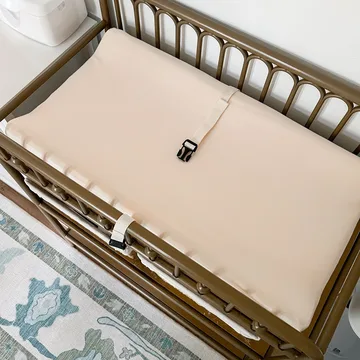
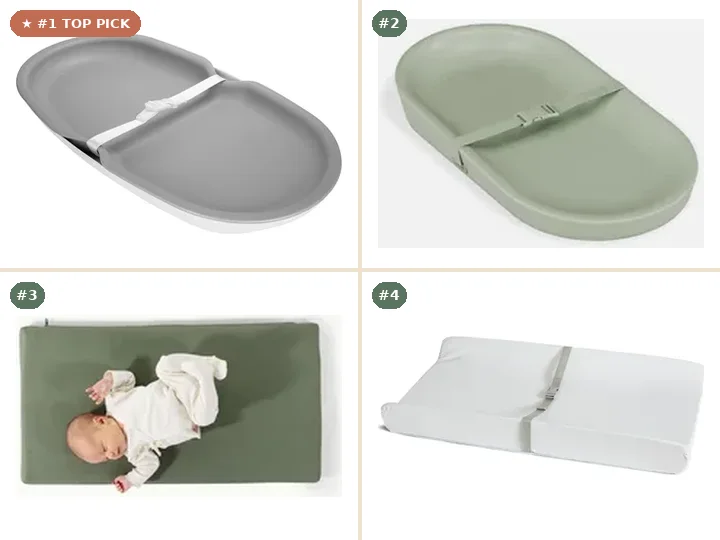
Wipe-Clean Changing Pads and Mats
Daily cover laundry
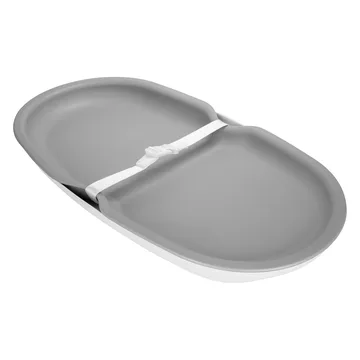
Wipeable pads skip the fabric cover entirely, which helps during blowout season. Ubbi's foam pad has non-skid feet and a safety strap. Gathre's mats are wipeable and water-resistant, and Gathre says they're free of PVC, phthalates and lead.
Ubbi: wipe-clean foam, safety strap, non-skid feet; Lalo: wipeable non-absorbent surface, slip-free feet; Gathre Padded: 16 x 30 x 1.5 in, CPSIA compliant per the brand; Munchkin Secure Grip: grip strips, straps, contoured sides
Why we picked it: A non-absorbent surface you wipe between changes means fewer covers to wash. Check each brand's material list if avoiding PVC and phthalates is your priority.
Organic Cotton Changing Pad Covers
Polyester or vinyl pad covers
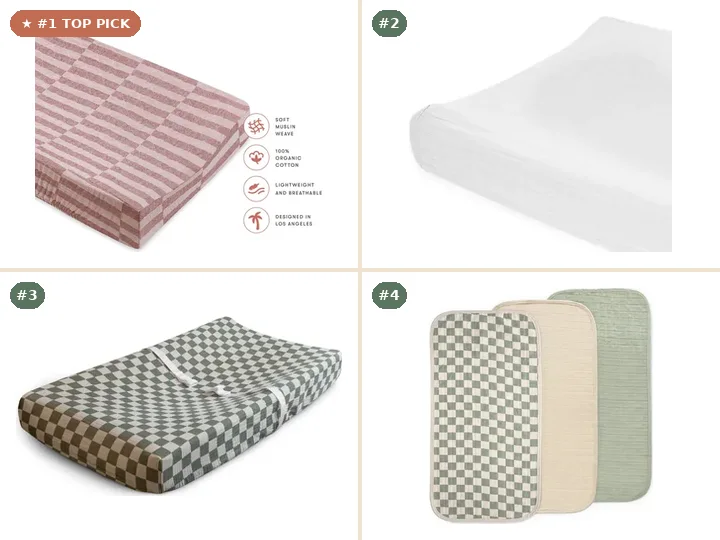
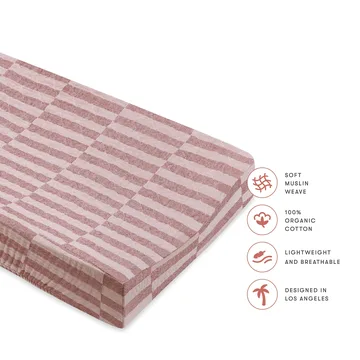
Muslin covers are soft and breathable, and they wash easily. Babyletto's quilted cover uses GOTS-certified organic muslin. Little Unicorn's organic covers list GOTS and OEKO-TEX Standard 100, with elastic all the way around and holes for the safety strap.
Babyletto: GOTS organic muslin, 32.25 x 16 x 6.75 in; Little Unicorn: 100% organic cotton muslin, GOTS and OEKO-TEX (per the brand); Mushie: 100% cotton muslin, pre-washed; Mushie liners: organic cotton top with a water-repellent layer
Why we picked it: GOTS covers organic fiber content and restricts harsh processing chemicals, and OEKO-TEX Standard 100 means the fabric was tested for harmful substances.
Portable Changing Pads for the Diaper Bag
Public changing tables with nothing in between
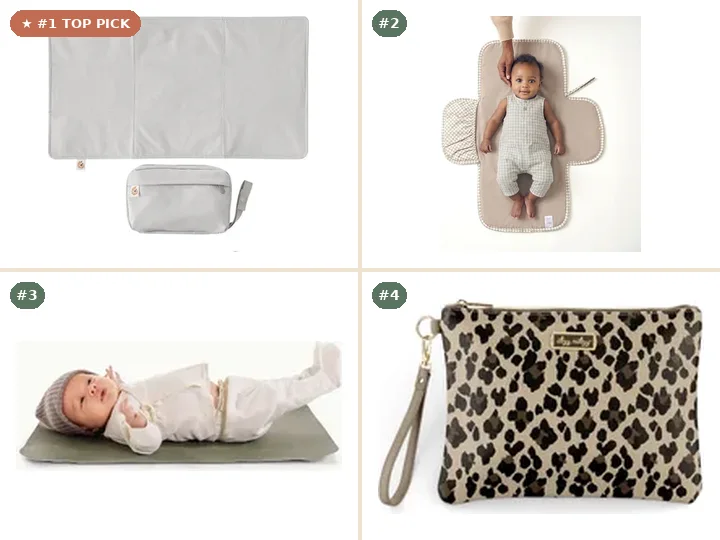
A foldable pad gives your baby a clean surface on public changing tables, car seats and floors. Toddlekind's Mini Maven uses organic cotton with a water-resistant base. Ergobaby's pad doubles as a pouch that clips to its carriers.
Toddlekind Mini Maven: organic cotton, water-resistant base, folds into a clutch; Ergobaby: cushioned wipe-clean pad with storage pockets; Gathre Micro: 16 x 30 in, wipeable, folds compactly; Itzy Ritzy Boss Clutch: vegan leather, wipeable pad, 2 interior pockets
Why we picked it: A barrier between your baby and a public changing surface is simple hygiene, and a pad that folds into a clutch means you'll actually bring it.

FAQs
What should a non-toxic changing pad be made of?
Look for organic cotton or polyester fill instead of polyurethane foam, waterproofing made from food-grade polyethylene (PE) instead of vinyl (PVC), and no added flame-retardant chemicals. Third-party certifications like GREENGUARD Gold and GOTS, listed on the brand's own site, help you check the claims.
Do I need a changing pad cover?
No. Wipe-clean pads, like Ubbi's foam pad or Lalo's wipeable pad, are made to be used without one. Covers add softness, though, and many parents keep two or three in rotation so one is always clean.
Is it safe to use a changing pad on a dresser?
Use a contoured pad that's attached to the dresser or changing tray. Naturepedic includes snap screws, and Babyletto's pad fits its changer trays. Buckle the safety strap and keep one hand on your baby at all times, since falls from changing surfaces are a known injury risk. Never step away, even for a second.
How often should I wash changing pad covers?
Wash a cover whenever it's soiled, and otherwise on your regular laundry day. A washable liner on top of the cover can stretch the time between changes. Wipe-clean pads only need a damp cloth and mild cleaner, then let them dry fully.
Get the free Low-Tox & Screen-Free Starter Kit
8 printable pages for parents of little ones: 10 easy lower-tox swaps, screen-free bingo, a week planner and a one-page “where to start” checklist. The download appears right here, and we’ll email you our free Nursery & Playroom Checklist plus 3 short emails over the next week, then one short email a week.